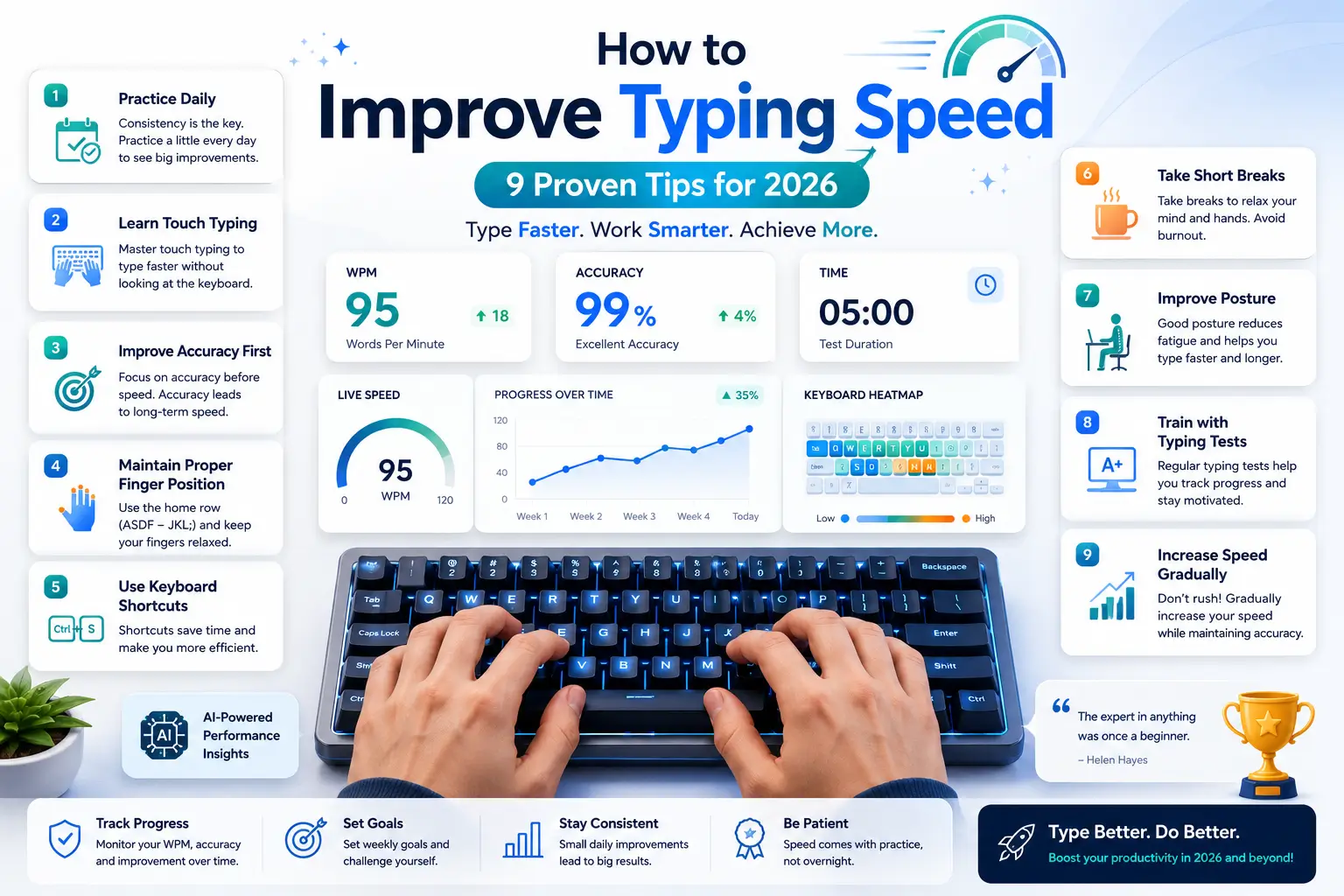
Want to know how to improve typing speed without wasting months? The secret is simple. Focus on accuracy first, learn touch typing, and practice 15 minutes a day. Most people jump from 30 WPM to 60 WPM in just a few weeks with the right method. This guide gives you 9 proven tips, the correct finger positions, and free ways to test your words per minute today.
Slow typing costs you time every single day. Whether you write emails, code, or study for exams, faster typing means more work in less time. The good news is that typing speed is one of the easiest skills to improve at any age. Let us break down exactly how to do it.
Why Improving Typing Speed Matters
Faster typing is not just about looking skilled. It saves real hours and lowers stress. A person typing 60 WPM finishes the same work in half the time of someone typing 30 WPM.
Here is what better typing speed gives you:
- More productivity at work and school
- Less strain on your hands and eyes
- Better focus because typing feels natural
- Higher exam scores for typing based government tests
Before you start, check where you stand. Take a quick one minute typing test and note your current WPM. This becomes your baseline to beat.
9 Proven Tips to Improve Your Typing Speed
These methods work for beginners and advanced typists alike. Follow them for the best results.
1. Learn Proper Touch Typing
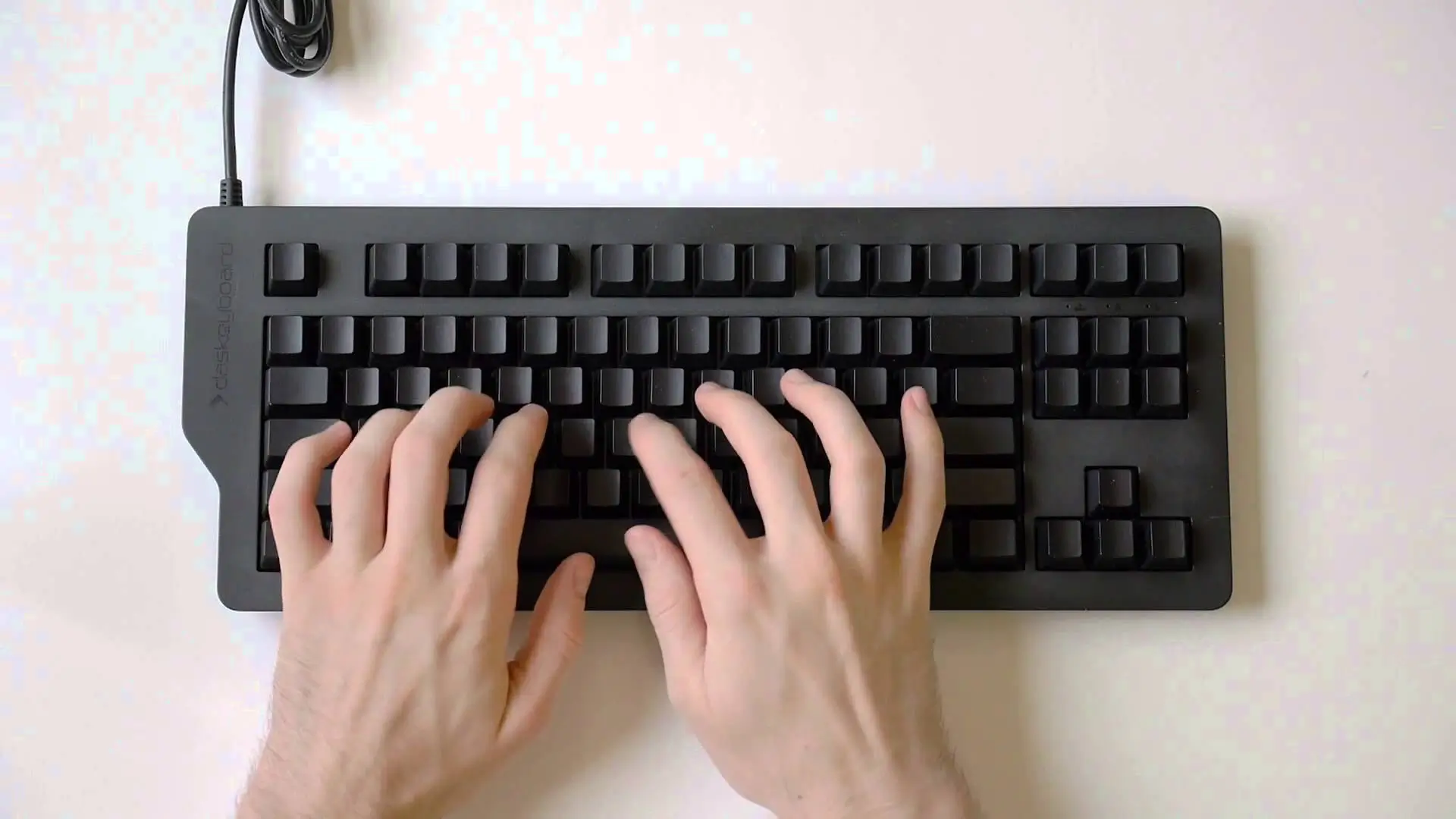
Touch typing means typing without looking at the keyboard. You use muscle memory instead of your eyes. This single habit is the biggest speed booster of all.
Place your fingers on the home row keys. Your left fingers rest on A, S, D, F. Your right fingers rest on J, K, L, and the semicolon. Feel the small bumps on F and J to find your spot without looking.
2. Focus on Accuracy Before Speed
This tip feels backward but it works. When you slow down and type correctly, your brain learns the right patterns. Speed then comes naturally.
Remember this: A typist at 50 WPM with 98% accuracy beats one at 60 WPM with 85% accuracy. Every mistake costs you the time you save.
3. Use All Ten Fingers
Many slow typists use only two or four fingers. This hunt and peck style has a low speed limit. Using all ten fingers spreads the work and lets you type faster with less effort.
4. Practice 15 to 20 Minutes Daily
Short daily practice beats long tiring sessions. Your fingers and brain build memory better with steady repetition.
| Practice Style | Result |
|---|---|
| 15 minutes daily | Fast, steady growth |
| 2 hours once a week | Slow, easy to forget |
| No fixed schedule | Little to no progress |
5. Warm Up Before Real Work
Just like exercise, your fingers need a warm up. Type a few easy sentences before starting real work. This gets your hands ready and reduces early mistakes.
6. Practice With Real Paragraphs
Random word tests give high scores but do not match real life. Real work has punctuation, capitals, and full sentences. Practice on a paragraph typing test to build skills you actually use every day.
7. Do Not Look at the Keyboard
Every time you look down, you break your rhythm. It feels hard at first, but keep your eyes on the screen. Within a week, your fingers will remember the keys on their own.
8. Keep Good Posture
Sit straight with both feet flat on the floor. Keep your wrists slightly raised, not resting on the desk. Good posture reduces strain and lets your fingers move freely.
9. Track Your Progress
You improve what you measure. Test your speed at the start and end of each week. Seeing your WPM climb keeps you motivated to continue.
Correct Finger Placement Chart
Learning which finger hits which key is the foundation of fast typing. Here is the standard layout.
| Finger | Keys to Press |
|---|---|
| Left pinky | Q A Z |
| Left ring | W S X |
| Left middle | E D C |
| Left index | R F V T G B |
| Right index | Y H N U J M |
| Right middle | I K comma |
| Right ring | O L period |
| Right pinky | P and punctuation |
| Thumbs | Space bar |
Tip: Print this chart and keep it near your screen until the positions feel natural.
How Fast Can You Improve?
With daily practice, most people see steady gains. Here is a realistic timeline.
| Week | Expected Gain |
|---|---|
| Week 1 | 5 to 8 WPM increase |
| Week 2 | 8 to 15 WPM increase |
| Week 4 | 15 to 25 WPM increase |
| Week 8 | Speed can double |
These numbers depend on your starting point and effort. Beginners improve fastest because they have the most bad habits to fix.
Common Mistakes That Slow You Down
Avoid these habits that keep typists stuck at low speeds:
- Looking at the keyboard while typing
- Using only two fingers instead of ten
- Rushing past errors without fixing your technique
- Skipping daily practice and cramming once a week
- Ignoring accuracy and chasing raw speed only
Fix these, and your speed will climb much faster.
Best Free Tools to Practice Typing
You do not need paid software to get faster. Free online tests work perfectly for daily practice.
- For quick daily checks: Use a typing speed test with fresh text each time
- For real world skill: Practice on the paragraph typing test
- For your own material: Paste any text into the custom typing test
- For exam prep: Use the exam mode typing test with real exam rules
Frequently Asked Questions
How can I improve my typing speed quickly?
Practice touch typing 15 to 20 minutes daily, focus on accuracy first, and use all ten fingers. Keep your eyes on the screen, not the keyboard. Most people gain 5 to 10 WPM per week with steady practice.
How long does it take to improve typing speed?
Most people see clear gains within 1 to 2 weeks. With daily practice, you can double your speed in about 8 weeks. Beginners improve fastest because they have more bad habits to fix.
What is the fastest way to increase WPM?
The fastest way is to learn proper touch typing and practice on real text daily. Slow down to build accuracy first, then let speed follow. Track your score each week to stay motivated.
Does typing speed improve with age?
Typing speed can improve at any age. Practice and technique matter far more than age. A motivated adult who drills for a month will out type a young person who never learned proper typing.
Should I practice on random words or paragraphs?
Practice on both. Random words build raw finger speed, while paragraphs build real world skill with punctuation and capitals. For exams and jobs, paragraph practice is more useful.
Final Thoughts and Experience
Improving your typing speed is one of the most rewarding skills you can build. It takes just 15 minutes a day and pays off for the rest of your life. The key is patience. Do not chase big jumps overnight. Focus on clean, accurate typing and let speed grow naturally.
Start today by testing your current WPM, then practice daily and watch the numbers climb. Ready to begin? Take a free typing test now and start your journey to faster typing.